Most buying advice for compliance management solutions gets one thing wrong. It treats the category as if every product is trying to replace your entire GRC stack. That's not how teams buy. Some tools exist to centralize controls, some to automate evidence collection, some to run internal audit and policy workflows, and some to solve one stubborn operational gap such as training records that auditors can use.
That distinction matters because the market is still expanding fast. One market estimate puts compliance management software at an estimated $60.02 billion in 2025, rising to $68.4 billion in 2026, while a broader compliance management solution estimate places the sector at $3.59 billion in 2025 and $3.93 billion in 2026. Buyers clearly aren't debating whether to invest. They're deciding where automation reduces the most manual work.
The sharper question is operating model fit. How does the platform collect evidence? Which systems does it pull from cleanly? How much risk, policy, privacy, and audit workflow does it support? What implementation burden does it create for the team that has to own it after the sales process ends? Pricing visibility matters too, because many platforms are broad enough that scope creep shows up before the contract does.
Vanta and Drata are often shortlisted as system-of-record destinations for compliance evidence. That's useful, but it doesn't mean every adjacent workflow needs to live inside them. Tools like Vigil Security can feed those platforms with training evidence while solving a narrower problem better. That's the lens for the list below.
1. Vigil Security
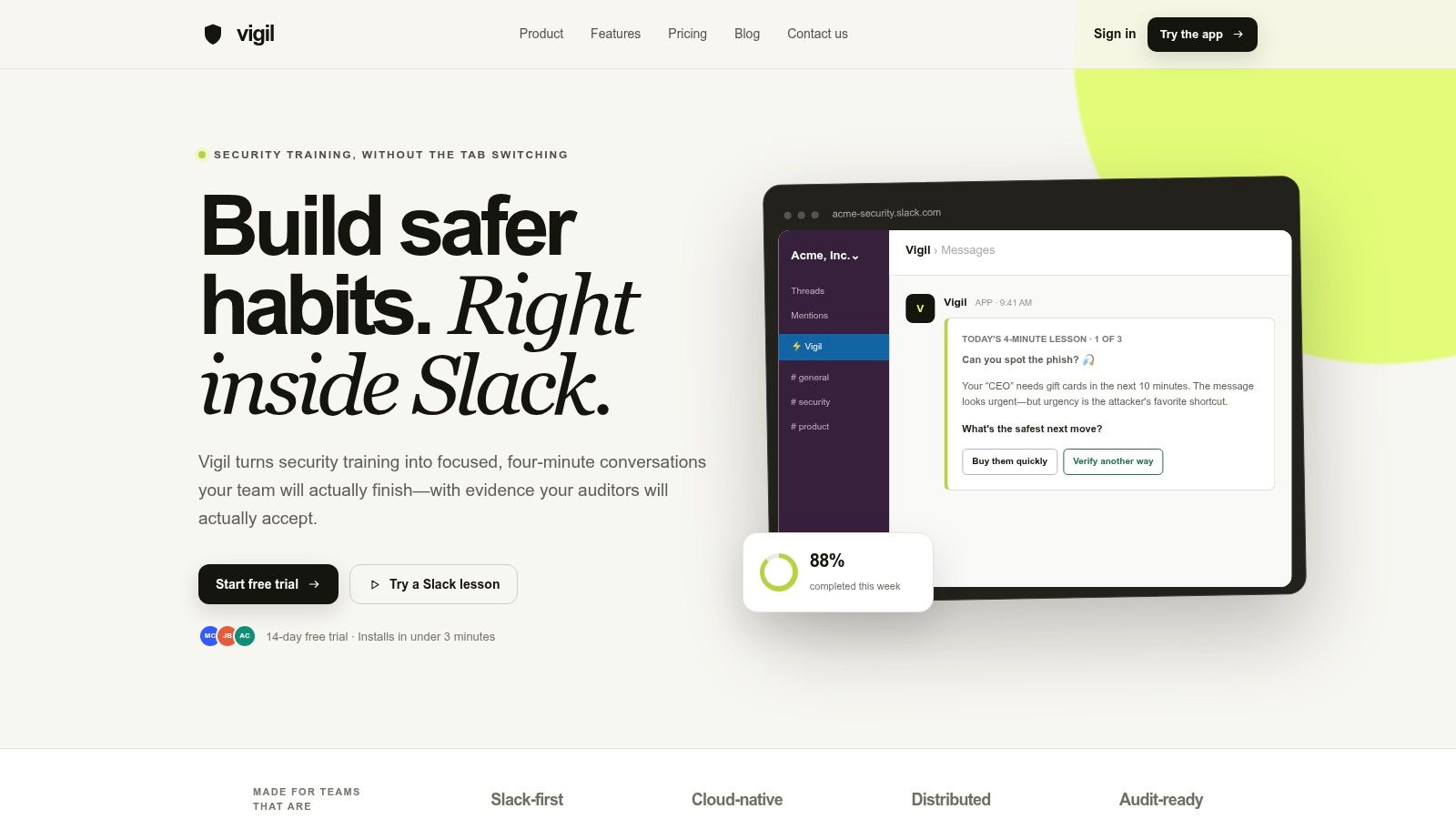
Vigil Security is a reminder that compliance teams do not always need another broad control system. Sometimes the expensive gap is narrower. Training records often sit in LMS exports, email confirmations, quiz tools, and policy acknowledgments that are hard to reconcile during an audit. Vigil focuses on that evidence chain by delivering training inside Slack and producing records that a larger compliance stack can use.
Its operating model is different from course-library tools that optimize for annual completion. Vigil uses short Slack-native lessons, recurring microlearning, pulse quizzes, phishing simulations, policy prompts, and automated follow-up. That design fits a real weakness in many programs. Bright Defense cites employee feedback showing training is often seen as relevant and engaging, yet overall compliance-program effectiveness remains meaningfully short of perfect. The operational issue is not just whether a module was assigned. It is whether training happened in a place employees already use and whether the resulting evidence is audit-ready.
Where it fits operationally
Vigil is strongest when the missing control evidence is behavioral. Teams that already run frameworks, tests, and auditor requests in Vanta or Drata may not need another system of record for general compliance work. They may need a cleaner way to prove who received training, which policy version they saw, how they performed, and whether remediation occurred after a failed quiz or phishing event.
That is the practical use case. Vigil syncs lesson and version snapshots into Vanta and Drata, and it also supports CSV and PDF exports for auditors who still work from request lists and attachments.
Practical rule: If your audit friction centers on training completion, content versioning, and proof of user acknowledgment, a focused evidence tool can be easier to operationalize than a broader platform module.
A few capabilities matter more than the feature count suggests:
- Slack-based evidence workflow: Lessons, reminders, quizzes, and phishing coaching run in Slack DMs, channels, or App Home, which reduces context switching for employees.
- Evidence portability: Records can sync into Vanta and Drata, with snapshots and exports that align with common frameworks such as SOC 2, ISO 27001, HIPAA, PCI DSS, and NIST CSF.
- Lower administrative load: Teams can assign by workspace, channel, team, or user, then automate reminders, grading, certificates, and recurring campaigns.
- Organization-specific training inputs: BYOK support for customer-provided OpenAI or Anthropic keys allows more custom scenarios for teams that want tighter control over AI usage.
Trade-offs and buying notes
The main constraint is straightforward. Vigil depends heavily on Slack as the delivery layer. Companies with frontline workforces, mixed collaboration tools, or limited Slack adoption should test that assumption early, because the product's implementation burden stays low partly because it does not try to cover every communication environment.
Pricing transparency is better than in much of the category. Vigil publishes plans that start at 25 learners, with a listed rate of $2 per learner per month and a minimum of $50 per month or $500 per year. It also offers a 14-day free trial. That matters for buyers comparing point solutions with broader compliance suites where training is bundled, but pricing often becomes visible only after scope discussions.
For Slack-centric teams, Vigil addresses a specific operational problem that larger compliance platforms often treat as a secondary workflow rather than a primary evidence stream.
Visit Vigil Security.
2. Vanta
Vanta is strongest when the core problem is evidence sprawl across cloud infrastructure, identity, devices, HR systems, and engineering tools. It's less a document repository than a continuous collection layer for compliance operations. Teams usually buy it when they want a central place to map controls, monitor status, and reduce the amount of human screenshot work before every audit.
Its appeal lines up with a broader market pattern. Independent benchmark data shows 70% of surveyed organizations already use GRC software to monitor security controls and report on compliance posture, while 48% still struggle with switching between multiple systems for risk management. Vanta's integration-first model is a direct response to that fragmentation.
Best fit and implementation profile
Vanta makes the most sense for companies that want broad framework coverage without jumping immediately to an enterprise GRC suite. It supports multiple frameworks, including custom frameworks, and offers a large integration catalog that reduces manual evidence collection for API-friendly systems. It also includes in-platform training and data residency options that matter for teams operating across regions.
That said, implementation effort depends on your stack more than on the product demo. When the source systems are modern and exposed through stable APIs, Vanta tends to look efficient. When your controls rely on manual reviews, offline evidence, or niche systems, the platform still needs people to close the gap.
- Operational problem solved: Continuous collection and mapping of compliance evidence across many systems.
- Evidence workflow: Best for controls that can be tested or refreshed automatically.
- Integration depth: Mature and broad, especially for cloud-first environments.
- Implementation burden: Moderate. Lower for standard SaaS stacks, higher when manual evidence dominates.
Pricing is quote-based, not published. That's normal for this category, but it means buyers should validate what's included in the base package versus what appears only after scoping.
Visit Vanta.
3. Drata
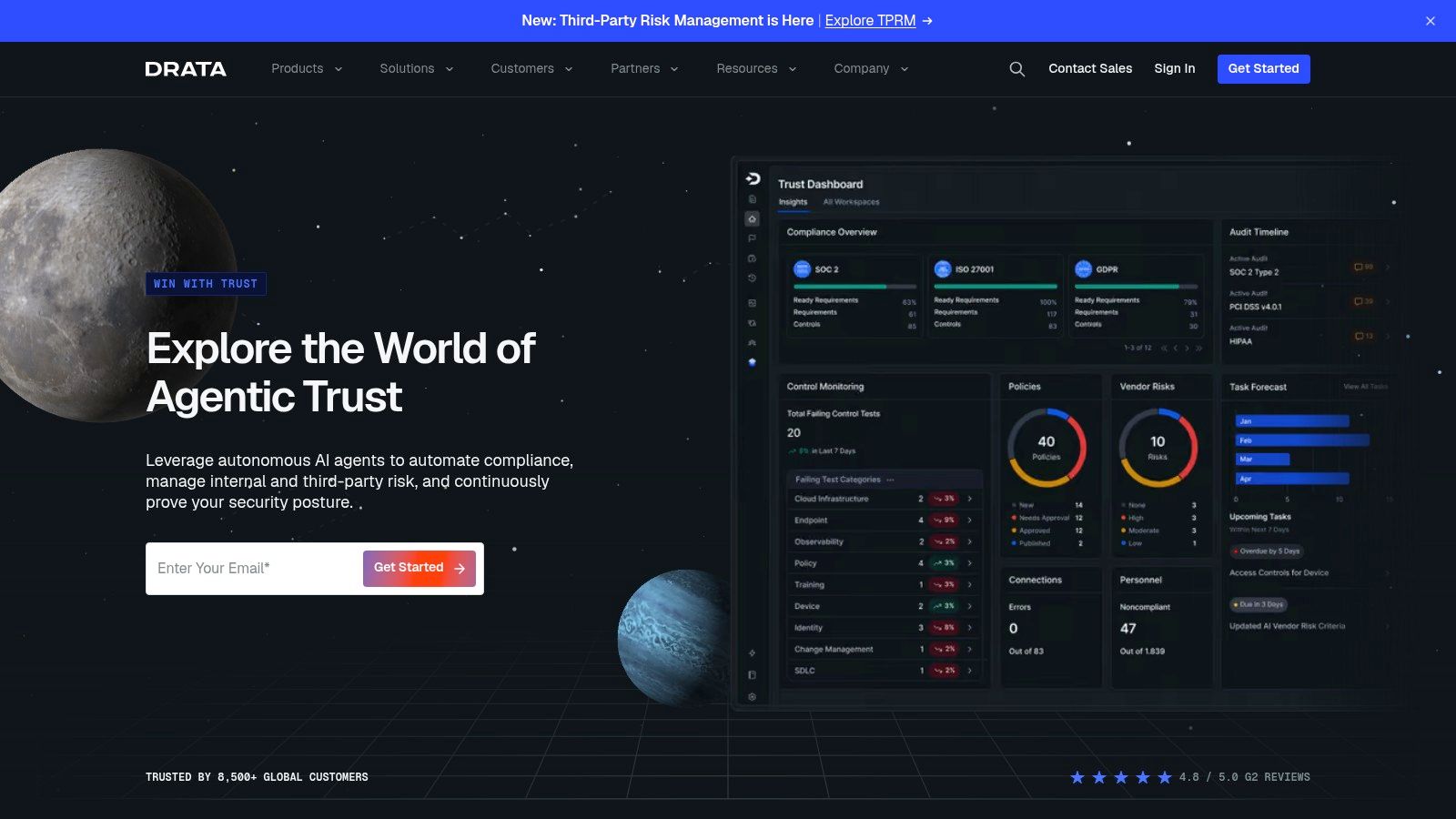
Drata suits teams that treat compliance as an operating workflow rather than a periodic audit project. Its strongest case appears when evidence has to serve more than one audience. Auditors need control proof, prospects send security questionnaires, and go-to-market teams want current trust materials without pulling security staff into every request.
Drata's real differentiator is how evidence moves into adjacent work such as questionnaires and trust centers. That changes the buying case. A platform that collects artifacts but leaves downstream proof handling in email and spreadsheets reduces audit friction, but it does less to cut the day-to-day workload on security and compliance teams.
Where Drata fits best
Drata is well matched to organizations where the bottleneck is evidence reuse, not just evidence capture. Its automation and control testing cover the core compliance motion, while its API options and outward-facing trust workflows make it more useful in environments where compliance, sales, and security assurance overlap.
That distinction matters in practice. If your team answers frequent customer security reviews, each approved control and uploaded artifact can support several workflows instead of sitting in an audit trail until the next certification cycle.
A good example is training evidence. Some teams use Drata as the system of record while running behavior-focused training in a separate tool. If phishing simulations are part of your control environment, a dedicated program such as Slack-based phishing simulation training can produce cleaner audit records and clearer ownership than a generic learning system.
Questionnaire volume is easy to underestimate. Audit prep is periodic. Proof requests from prospects, customers, and partners can be continuous.
Trade-offs and implementation effort
Drata still depends on the same practical constraint that affects every automation-led compliance platform. Controls tied to people, such as access reviews, approvals, interviews, exception handling, and policy attestations, still require process discipline from internal owners.
Implementation effort also varies by ambition. A team deploying one framework with a modern SaaS stack will usually get value faster than a team trying to standardize several frameworks, centralize trust content, and connect custom systems through the API at the same time.
Its fit is clearest in four areas:
- Operational problem solved: Centralizing evidence and reusing it across audits, questionnaires, and trust-facing workflows.
- Evidence workflow: Strong for continuous collection, recurring tests, and proof that needs to be surfaced outside the audit team.
- Integration depth: High for technical teams that want API flexibility alongside standard connectors.
- Implementation burden: Moderate. It rises when manual controls, custom integrations, or multi-framework rollouts are part of the first phase.
Pricing is quote-based rather than published, which makes package comparison harder at the shortlist stage. Buyers should confirm which workflow modules, framework support, and trust features are included before treating Drata as a like-for-like alternative to lower-scope compliance automation tools.
Visit Drata.
4. Secureframe
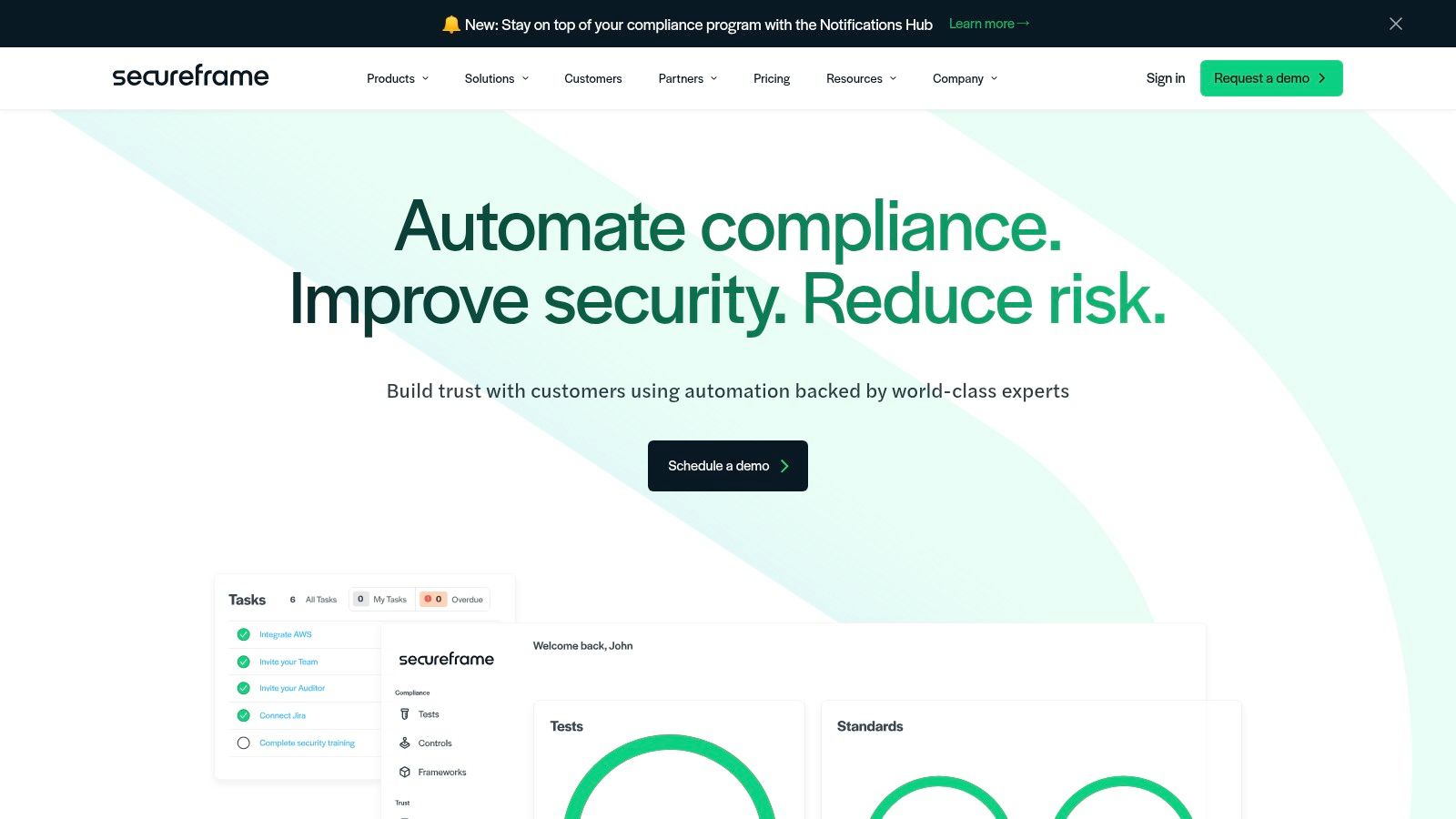
Secureframe sits in the compliance automation layer, but its practical advantage is that it extends beyond basic audit prep into adjacent risk and third-party workflows. For buyers who know they'll need more than evidence collection but don't yet want a heavyweight GRC program, that middle ground can be attractive.
The platform supports a wide set of frameworks, a large integration catalog, automated monitoring, and built-in workflows for risk and vendor management. That matters because many teams discover too late that their first compliance purchase solved only the auditor-facing portion of the job.
Best use case
Secureframe fits teams that want one operating surface for control evidence, lightweight risk tracking, and third-party review work. It's especially useful when the compliance owner is trying to reduce the number of handoffs between security, procurement, and internal control owners.
There's also a market context behind that. Major-market research shows cloud is now the dominant deployment model, with cloud accounting for 69.23% of compliance software market share in 2025 and projected to grow at a 13.19% CAGR through 2031, while large enterprises held 57.14% share and SMEs are growing faster at 12.96% CAGR. Secureframe's posture aligns with that cloud-first, scaling-company demand pattern.
- Operational problem solved: Combining automated compliance evidence with adjacent risk and vendor workflows.
- Evidence workflow: Strong for continuous monitoring plus manual supplementation where needed.
- Integration depth: Broad, with native and API-based options.
- Implementation burden: Moderate. More moving parts than a narrow compliance tool, less than an enterprise suite.
The trade-off is scope clarity. Some custom integration paths and workflow assumptions may require buyers to verify how manual evidence fits into their intended operating model. Pricing is quote-based.
Visit Secureframe.
5. Thoropass
Thoropass wraps audit execution into the same commercial relationship as the software, which changes both implementation effort and vendor dependency. For buyers, that matters more than feature count. The core question is whether the main bottleneck is collecting evidence inside a platform or getting that evidence through audit review with fewer external handoffs.
That model fits teams where the compliance owner is also acting as project manager across security, IT, control owners, and the audit firm. In that situation, coordination overhead can be a larger problem than missing product functionality. Thoropass reduces some of that overhead by pairing readiness workflows with in-house audit services and integrations designed around common evidence requests.
The practical advantage is workflow compression. Instead of using one vendor for automation, another for advisory help, and a separate audit firm for final testing, teams can keep more of the evidence trail and interpretation loop in one place. That is especially useful for companies running their first formal audit or for lean teams that need help deciding what evidence is acceptable, how controls should be documented, and where manual follow-up is still required.
There is a trade-off.
Bundling software and audit support can lower early operational burden, but it also makes platform fit more consequential. If the integration model, user experience, or control workflow does not match how your team operates, switching later can be more disruptive than replacing a stand-alone compliance tool. Buyers should examine how evidence is requested, reviewed, and retained across the full audit cycle, not just how dashboards look during the sales process.
- Operational problem solved: Reducing coordination across readiness work, evidence collection, and audit execution.
- Evidence workflow: Structured for audit acceptance and reviewer follow-up, not only internal control tracking.
- Integration depth: Focused on practical evidence ingestion for audits, with less emphasis on highly customizable developer workflows.
- Implementation burden: Lower for smaller or less mature programs because service support can substitute for internal compliance capacity.
Compared with pure-play automation vendors, Thoropass usually asks buyers to accept less flexibility in exchange for more guided execution. That can be the right trade if speed to audit and accountability are the priority. It is a weaker fit for teams that already have a preferred auditor, want deeper workflow customization, or treat compliance operations as an internal system they plan to refine over time. Pricing is quote-based.
Visit Thoropass.
6. Sprinto
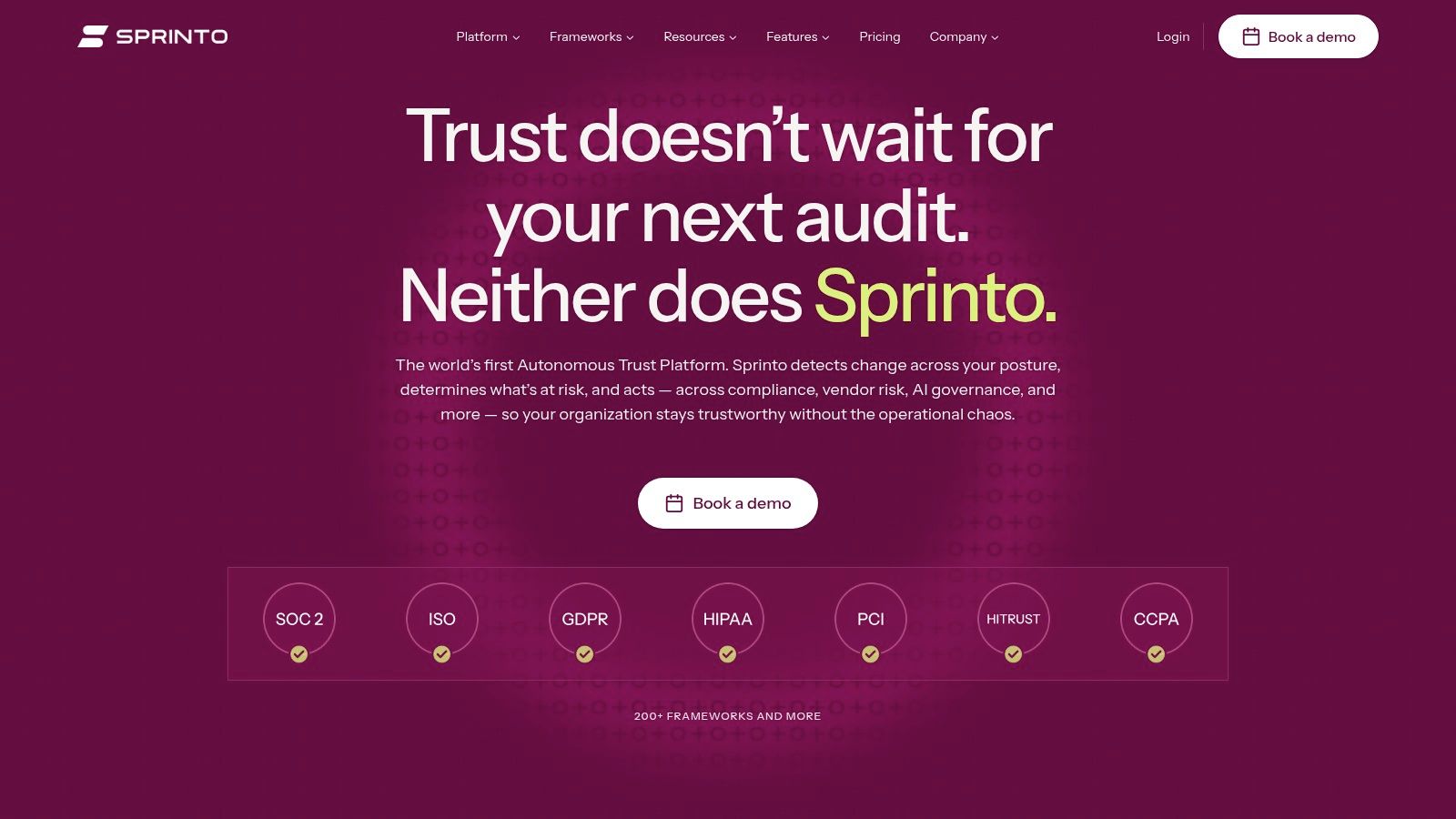
Sprinto fits a specific operating model: a lean team that needs audit progress quickly, has limited in-house compliance capacity, and wants the platform to carry more of the day-to-day control follow-up. That is a narrower problem than enterprise GRC, but it is a common one.
The practical appeal is workflow compression. Sprinto brings evidence collection, control monitoring, and onboarding support into one system so a security or ops lead does not have to stitch together separate tools, consultants, and auditor requests during an early certification cycle. For buyers planning SOC 2 first and ISO 27001 or regional frameworks next, that matters because the framework catalog can support a compliance roadmap that expands faster than headcount.
A useful way to evaluate Sprinto is to look at where manual effort remains. The platform reduces repetitive evidence gathering for cloud systems and standard controls, but approvals, policy adoption, and other human-process controls still need internal owners who will respond on time. Teams that expect software alone to close those gaps usually underestimate implementation work.
Sprinto is strongest in the phase where compliance has to become operational, not just documented.
- Operational problem solved: Building a repeatable audit-readiness process for first certifications and early multi-framework expansion.
- Evidence workflow: Suited to standardized evidence capture, recurring control checks, and auditor-facing organization of artifacts.
- Integration depth: Solid for cloud-first environments, with enough system coverage for common infrastructure evidence. Less depth for highly customized engineering workflows or fragmented business systems.
- Implementation burden: Moderate. Lighter than broad GRC platforms, but still dependent on internal participation for reviews, approvals, and exceptions.
That makes Sprinto a sensible fit for startups and mid-market companies that value speed, structure, and a guided path through initial audits. It is a weaker fit for organizations that already run mature internal audit, privacy, and risk programs and need heavier customization across multiple governance functions. Pricing is quote-based.
Visit Sprinto.
7. Optro (formerly AuditBoard)
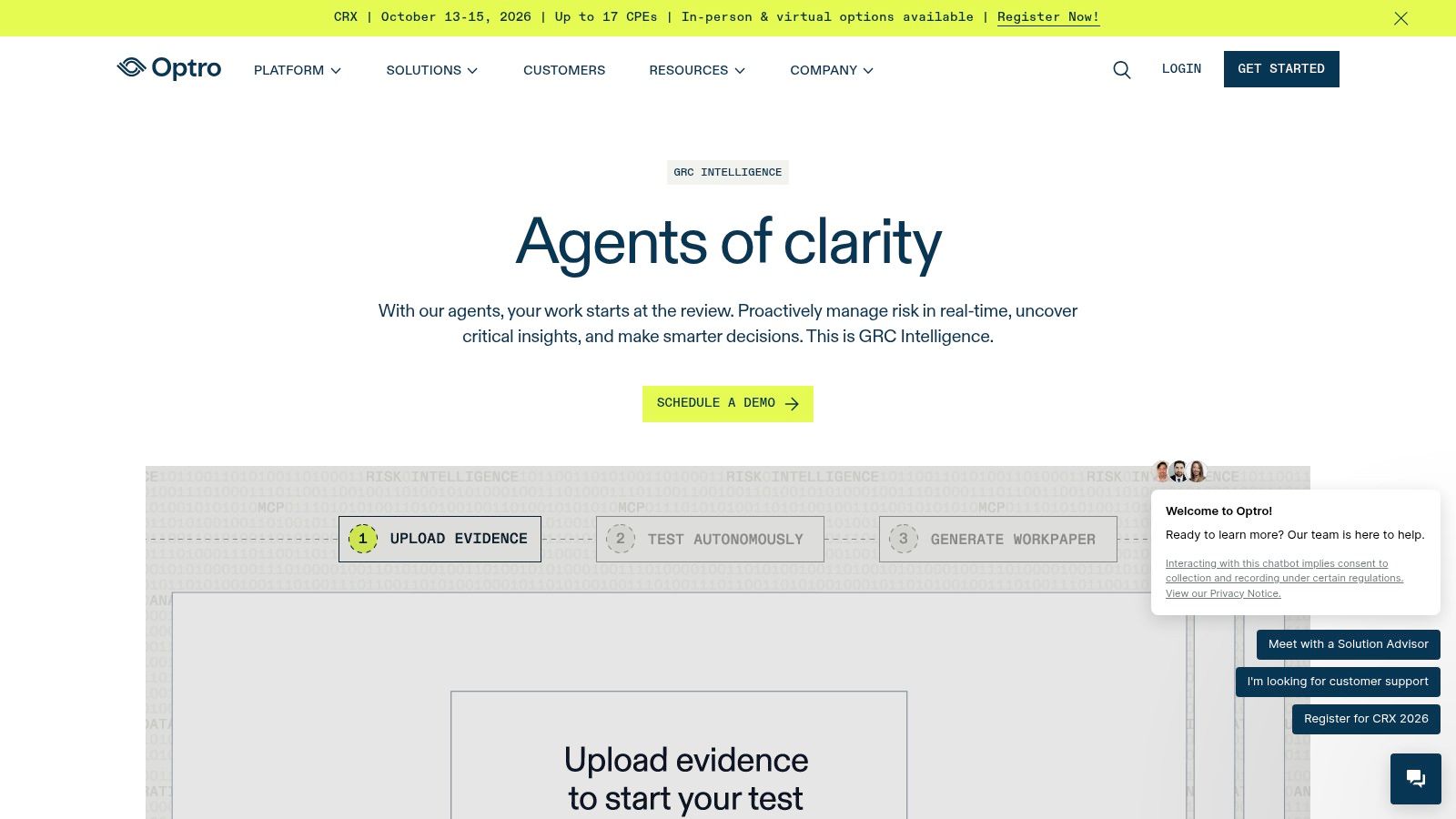
Buying Optro for certification automation is usually a category mistake. The platform fits programs where compliance is only one part of a larger governance system that also includes internal audit, risk management, regulatory change, and issue tracking across multiple business units.
The practical question is not how many modules it has. The question is whether your bottleneck is evidence collection or cross-functional governance. Optro is more persuasive in the second case. It gives audit, risk, and compliance teams a shared operating environment, which matters when findings, control owners, remediation plans, and reporting already span more than one line of defense.
A simple test helps. If your team already works like an enterprise risk and compliance operating model, with formal owners, review cycles, and management reporting, Optro is easier to justify. If the immediate goal is a first SOC 2 or ISO 27001 audit, the platform can introduce more design work than the initial compliance program needs.
That trade-off shows up in the evidence workflow. Optro is well suited to structured workpapers, control documentation, testing histories, exception handling, and downstream reporting for audit committees or executive stakeholders. It is less attractive for buyers who mainly want fast integration-led evidence capture with minimal process design. Those teams may get more capability than they can absorb.
Implementation is the filter.
Optro assumes governance maturity, not just tool adoption. Security teams considering it should budget for taxonomy decisions, ownership mapping, workflow configuration, and change management across functions. Pricing is quote-based, and cost visibility is limited before a sales process, which is common in enterprise GRC but still relevant for teams comparing it with lighter compliance platforms.
Visit Optro.
8. Hyperproof
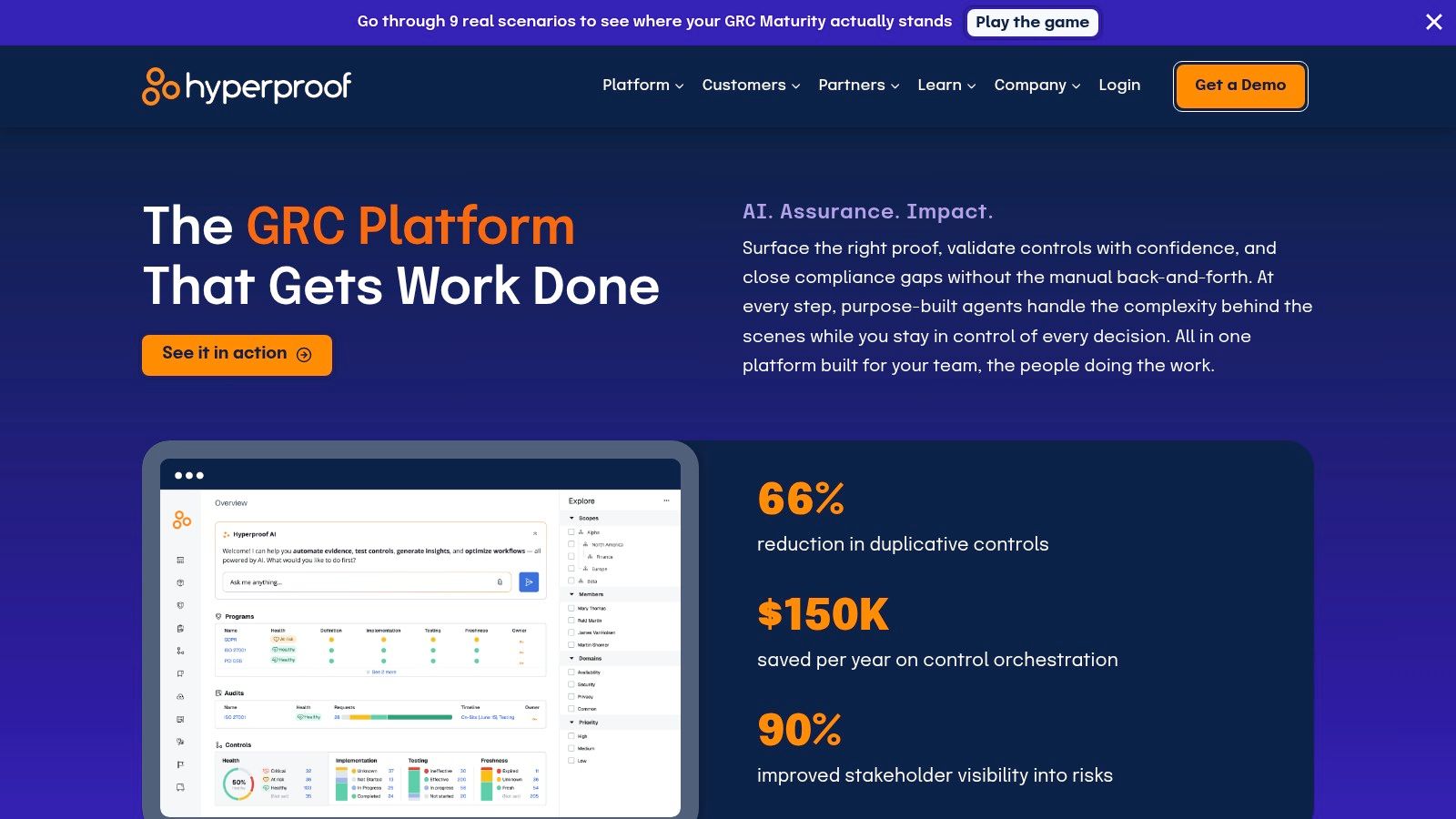
Hyperproof fits teams that already know the hard part of compliance is not framework mapping. It is keeping evidence current when control ownership sits across security, IT, engineering, and business operations.
The platform is best judged as an evidence operations system. LiveSync integrations, API access, SDK options, and workflow notifications support a model where proof moves through the program continuously instead of being collected in audit-season bursts. That changes the operating pattern. Control owners can respond inside familiar tools such as Slack or Microsoft Teams, and compliance teams can track review status without rebuilding the process around spreadsheets and reminders.
This makes Hyperproof more credible for companies that expect exceptions, custom systems, or mixed manual and automated controls. Buyers who only want the fastest path to a standard startup audit may not need that flexibility. Buyers with a wider control environment often do.
A practical evaluation starts with four questions.
- Operational problem solved: Coordinating evidence and task ownership across multiple systems and teams over time.
- Evidence workflow: Better suited to persistent synchronization, review routing, and collaboration than to one-time document collection.
- Integration depth: Strong for organizations that will use native connectors, APIs, or SDK-based extensions rather than stop at a catalog check.
- Implementation burden: Moderate to high. Value increases when teams invest in ownership design, workflow setup, and integration scoping.
Two procurement details matter more here than feature count. First, verify which integrations automate evidence capture and which mainly structure manual submission. Second, check whether your team has the internal capacity to use the platform's extensibility. Hyperproof can support a mature operating model, but it also asks for more design discipline than lighter tools. Pricing is quote-based.
Visit Hyperproof.
9. 6clicks
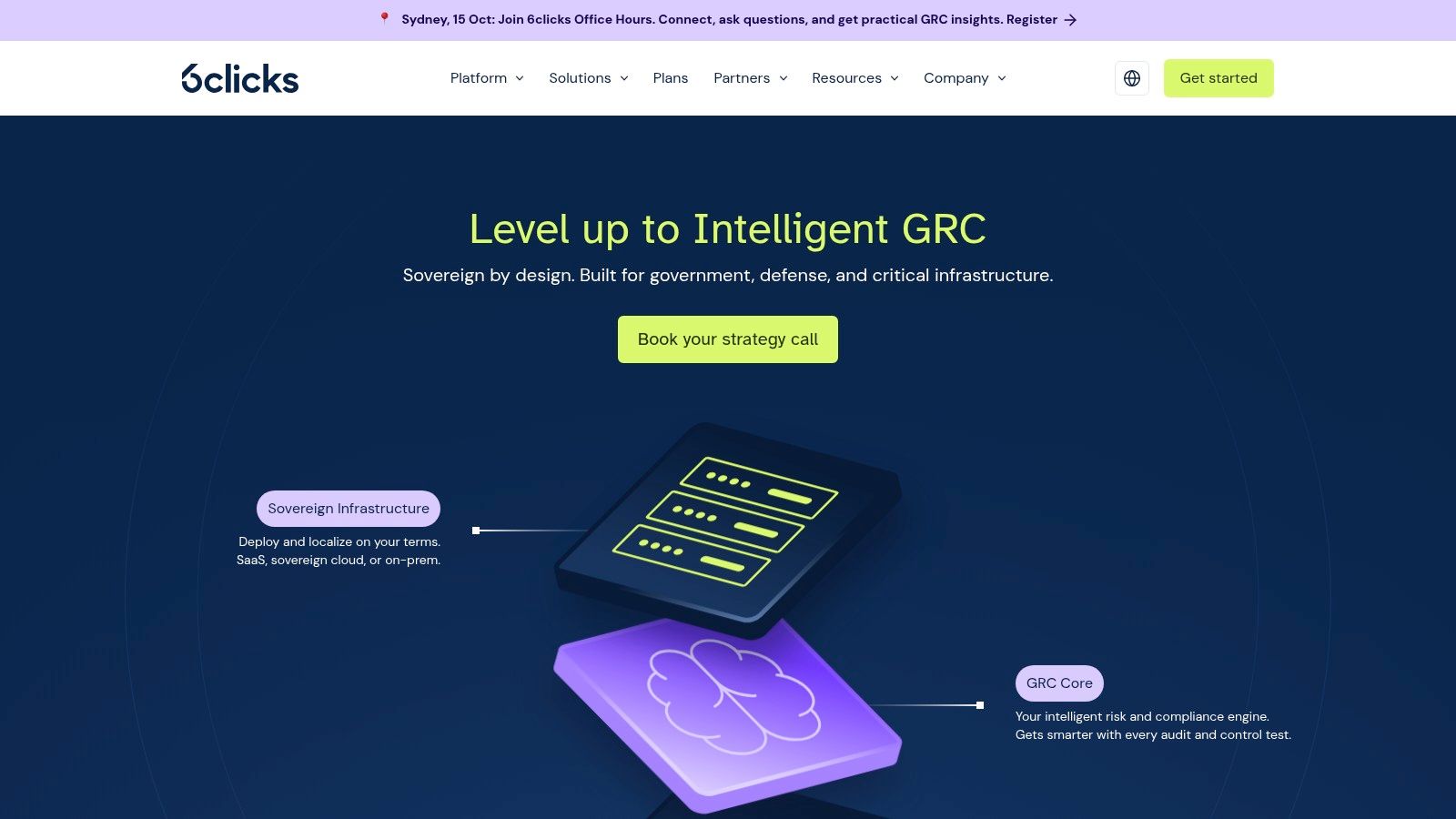
6clicks fits a narrower buying problem than many compliance platforms. It is less about speeding one audit for one company and more about running the same governance model across multiple entities, clients, or business units without rebuilding the system each time.
That changes how it should be evaluated.
The platform is most relevant in federated environments: enterprise groups with subsidiaries, internal shared-service teams, consultancies, MSPs, or firms that deliver repeatable compliance programs for many customers. In those cases, multi-tenancy is not a secondary feature. It shapes evidence collection, control inheritance, reporting boundaries, and who can change what.
A simpler buyer may see extra architecture and little return. A distributed operator may see the opposite.
Instead of asking whether 6clicks has enough frameworks or automation, buyers should test whether it reduces repeated setup work. Can a central team define a control structure once, adapt it for different entities, and keep oversight without forcing every local team into the same workflow? That is the operational question that matters here.
Its evidence model is strongest where reuse matters. Teams managing repeated assessments across similar environments can benefit from shared mappings, standardized workflows, and centralized oversight of local execution. Teams that mainly need direct system evidence capture for a single audit should verify how much work still sits with people rather than connectors.
The trade-off is implementation design. Multi-entity platforms can save time later, but only if tenancy, ownership, and reporting boundaries are configured carefully at the start. That burden is reasonable for organizations that already operate in a hub-and-spoke model. For a single security or compliance team with one audit perimeter, it can be overhead.
Two commercial details deserve scrutiny before procurement. First, 6clicks promotes an all-inclusive licensing approach, which may reduce the pricing friction common in per-user or per-module contracts, but buyers still need exact definitions of package limits and service scope. Second, public pricing visibility is limited, so comparison shopping requires a more hands-on sales process than with tools that disclose entry tiers upfront.
Visit 6clicks.
10. OneTrust
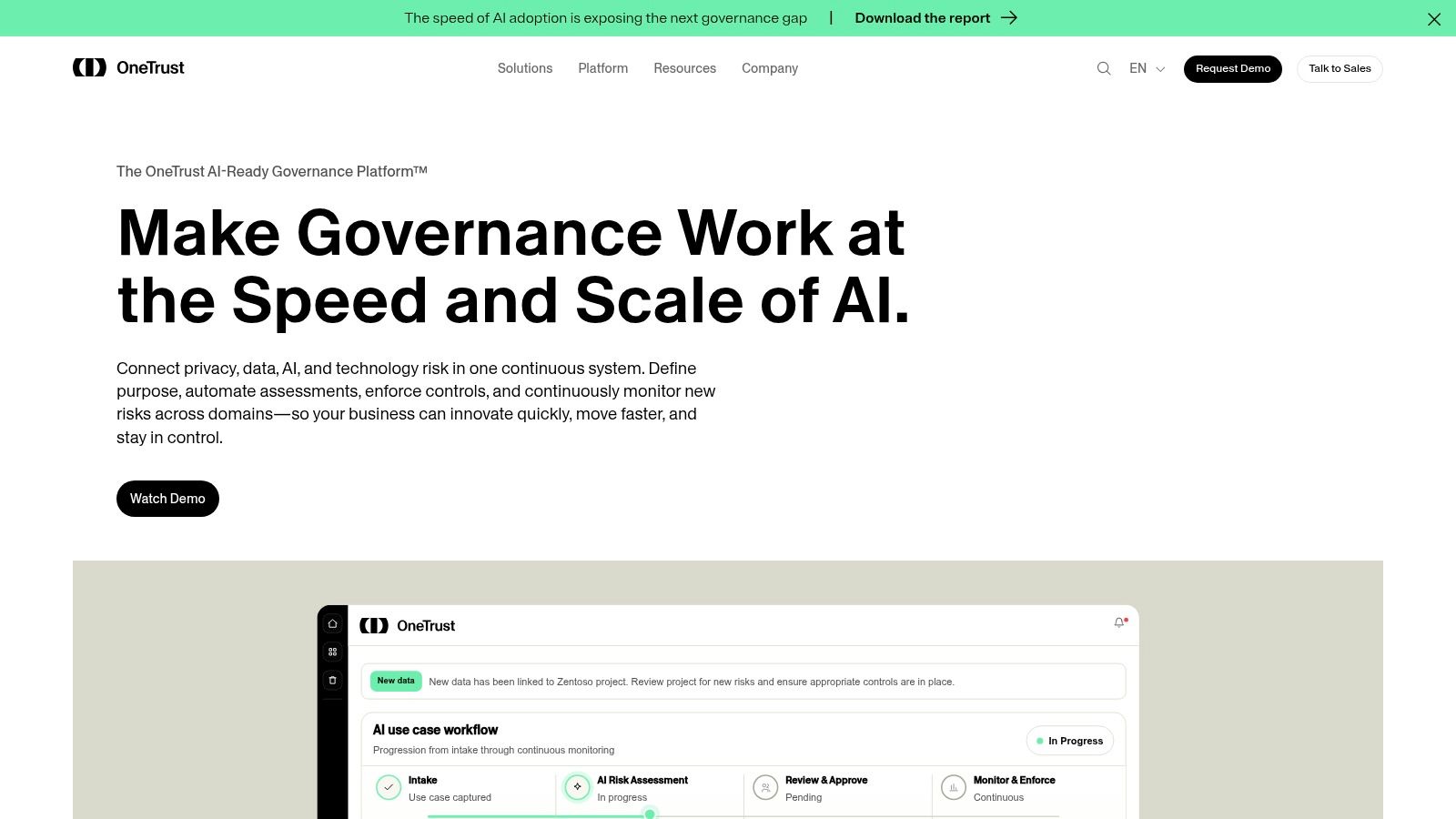
OneTrust fits organizations where privacy work shapes the compliance operating model. Its appeal is less about adding another control library and more about keeping privacy operations, third party reviews, regulatory change, questionnaires, and broader governance inside one vendor relationship.
That operating model matters because many teams still move evidence between disconnected systems. Thomson Reuters argues in its 2026 compliance outlook that compliance programs are expanding into areas such as AI, third parties, supply chain integrity, and digital assets while manual evidence collection remains a common source of audit friction. OneTrust's practical case is consolidation. If the same organization is handling consent, vendor risk, internal assessments, and policy change in parallel, separate point tools can create more handoffs than they remove.
The strongest use case is an enterprise that needs an evidence workflow tied to data handling decisions, not only security controls. A privacy request, a vendor assessment, and a policy update can affect the same records and owners. In that context, OneTrust can reduce duplication between legal, privacy, security, and GRC teams.
Implementation is the main trade-off. OneTrust offers depth across several domains, but that breadth increases design work, ownership questions, and change management. Teams adopting multiple modules at once should expect a heavier rollout than they would with a narrower compliance automation tool.
A practical test during evaluation is simple. Ask whether the platform improves the path from policy obligation to collected evidence to reviewer signoff, especially for teams that also need staff guidance on personally identifiable information training. If privacy sits at the center of the workflow, OneTrust is often a reasonable fit. If the requirement is mainly fast security audit automation for one framework, the added scope can become overhead.
Pricing is quote-based and modular. Buyers should press for clarity on which workflows require separate products, how implementation services are scoped, and how costs change as more governance teams join.
Visit OneTrust.
Top 10 Compliance Management Solutions Comparison
| Vendor | Core features | UX & effectiveness (★) | Value & pricing (💰) | Target audience (👥) | Unique selling points (✨) |
|---|---|---|---|---|---|
| Vigil Security 🏆 | Slack-native 4‑min lessons, weekly microlearning, phishing sims, evidence sync to Vanta/Drata | ★★★★★, high completion & retention (microlearning + coaching) | 💰 $2/seat/mo (annual), min 25; 14‑day trial | 👥 Slack-first, distributed cloud teams | ✨ Native Slack delivery; immutable audit snapshots; BYOK AI |
| Vanta | Continuous controls, 300+ integrations, in‑platform training | ★★★★, strong automation reduces manual evidence work | 💰 Quote-based | 👥 Teams needing centralized continuous compliance | ✨ Broad integrations & framework catalog |
| Drata | Automation across frameworks, open API, AI‑assisted questionnaires | ★★★★, good auditor handoff & automation | 💰 Quote-based | 👥 Engineering-centric teams scaling compliance | ✨ Open API + AI questionnaire assistance |
| Secureframe | 300+ integrations, automated monitoring, TPRM, audit partner network | ★★★★, active product updates, broad monitoring | 💰 Quote-based | 👥 Regulated/cloud-first orgs | ✨ TPRM workflows + FedRAMP-aligned exports |
| Thoropass | Auditor‑vetted integrations + in‑house audit services | ★★★★, end‑to‑end readiness → audit workflow | 💰 Quote-based | 👥 Teams wanting single vendor for readiness + audit | ✨ Platform + licensed audit services & playbooks |
| Sprinto | Extensive framework support, evidence collection, first‑audit guidance | ★★★, focused on accelerating initial certification | 💰 Quote-based | 👥 Startups → mid‑market pursuing first certs | ✨ Included auditor-led onboarding for first audits |
| Optro (AuditBoard) | Enterprise GRC modules (Audit, Risk, SOX, AI governance) | ★★★★, enterprise-grade for mature programs | 💰 Enterprise/quote-based | 👥 Large enterprises & Fortune 500 | ✨ Deep SOX/audit workflows & analyst recognition |
| Hyperproof | LiveSync integrations, APIs/SDK, Slack/Teams hooks, gov/EU options | ★★★★, developer-friendly, collaborative workflows | 💰 Quote-based | 👥 Engineering-driven, multi-framework programs | ✨ Hypersync SDK + data‑sovereignty options |
| 6clicks | All‑inclusive licensing, Hailey AI, hub‑and‑spoke multi‑tenancy | ★★★★, predictable licensing for high user counts | 💰 Contact for pricing; predictable multi-entity plans | 👥 MSPs/advisors and large multi‑entity orgs | ✨ AI mapping + no per‑user/module fees |
| OneTrust | Modular privacy, third‑party risk, regulatory change, enterprise GRC | ★★★★, consolidates privacy + GRC at scale | 💰 Modular, quote‑based | 👥 Organizations seeking combined privacy & GRC | ✨ Extensive regulatory content & ecosystem |
Match the Platform to the Compliance Workflow
The cleanest way to shortlist compliance management solutions is to stop asking which one has the longest feature list. Start with the workflow that currently breaks under audit pressure. For some teams, that's evidence collection across cloud systems. For others, it's questionnaire response, policy attestation, privacy operations, internal audit coordination, or training proof that stands up to review. The right platform is the one that removes friction from your highest-cost compliance motion without creating a larger operating burden elsewhere.
Framework coverage still matters, but it shouldn't drive the decision by itself. A long framework catalog doesn't help if the evidence sources you depend on aren't integrated cleanly, or if the platform assumes a governance model your team can't support. The same goes for broad GRC capability. A mature suite can be the right choice for enterprise audit and risk functions, while being the wrong choice for a company that mainly needs continuous control evidence and a manageable path through certification.
One underappreciated issue is proof quality. OCEG's 2025 survey found that organizations overwhelmingly measure training activity rather than training impact, while also identifying time constraints, generic approaches, coordination complexity, and resistance to AI adoption as persistent barriers in compliance and ethics training (OCEG 2025 survey findings). That's a useful reminder beyond training. Compliance teams often buy for activity tracking because it's easy to demo. They regret it later when they need evidence that maps to behavior, controls, and audit expectations.
A practical evaluation sequence looks like this:
- Test evidence sources first: Connect the systems that generate your most painful audit requests, not the easiest demo integrations.
- Validate human workflows: Run one access review, one policy acknowledgement, one questionnaire, and one auditor export.
- Check module overlap: Decide whether you need privacy, third-party risk, internal audit, or AI governance now, or whether that scope should remain separate.
- Assess implementation capacity: Broad platforms shift work from spreadsheets into configuration, ownership, and change management. That's still work.
- Verify commercial scope directly: Many vendors are quote-based, and integration or module inclusions can change materially by package.
Buy against a representative audit trail, not against a polished dashboard.
That means asking vendors to walk through a realistic sequence: a training record tied to a named control, an access review with approver evidence, a policy acknowledgement, a customer questionnaire response, and an auditor-ready export. If the workflow breaks under that sequence, the platform probably won't improve under pressure.
For Slack-first organizations, Vigil Security fits into that framework as a complement, not a universal replacement. It's designed for recurring awareness and compliance training inside Slack, with synchronized evidence flowing into Vanta or Drata. If your broader compliance system already works but your training records, engagement, or auditor proof still feel bolted on, that narrower approach can be the more operationally sound purchase.
If your team runs in Slack and needs training records that hold up in audits, Vigil Security offers short interactive lessons, phishing simulations, recurring microlearning, and evidence sync into Vanta or Drata. It's a practical fit when you want better behavior reinforcement and cleaner proof without replacing your broader compliance platform.